Volkswagen is retooling for a future without combustion engines, as is the German automobile industry. Thousands of smaller auto-parts manufacturers, on the other hand, are concerned about their future.
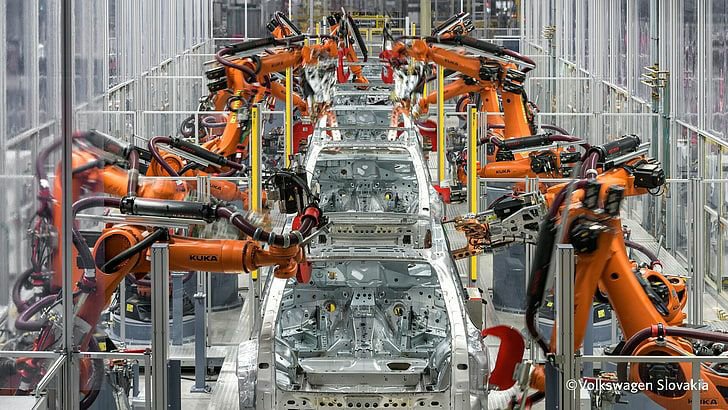
Dirk Kosbad began working at the Volkswagen plant in Zwickau in 1990 with the task of hand-assembling the Trabant, East Germany’s iconic car. He now works as a shift supervisor in the same factory, watching over orange robots scurrying around a silver car frame, shooting tiny bolts of lighting here and there, and welding together the various parts that will soon enclose a large rectangular battery. Volkswagen’s transition to electric mobility begins in Zwickau.
The internal combustion engine has had its day after more than a century of unrivalled power. The number of countries considering banning the sale of cars with internal combustion engines is growing: Norway will be the first to phase out in 2025, followed by the United Kingdom in 2030 and the European Union’s 27 member states in 2035. The European automotive industry, which employs 3.7 million people, is caught in the middle of a perfect storm. Digitization, automation, and the general public’s recognition of the gravity of the climate situation herald a revolution. Some see this as a golden opportunity.b
Automobile manufacturers have been forced to invest billions of euros in the development of more environmentally friendly vehicles in recent years. The change has already taken place in Zwickau. Beginning in 2019, Volkswagen retrained its 8,500 on-site employees and redesigned the entire production line to focus solely on electric vehicles.
 techtronicz
Leave a comment