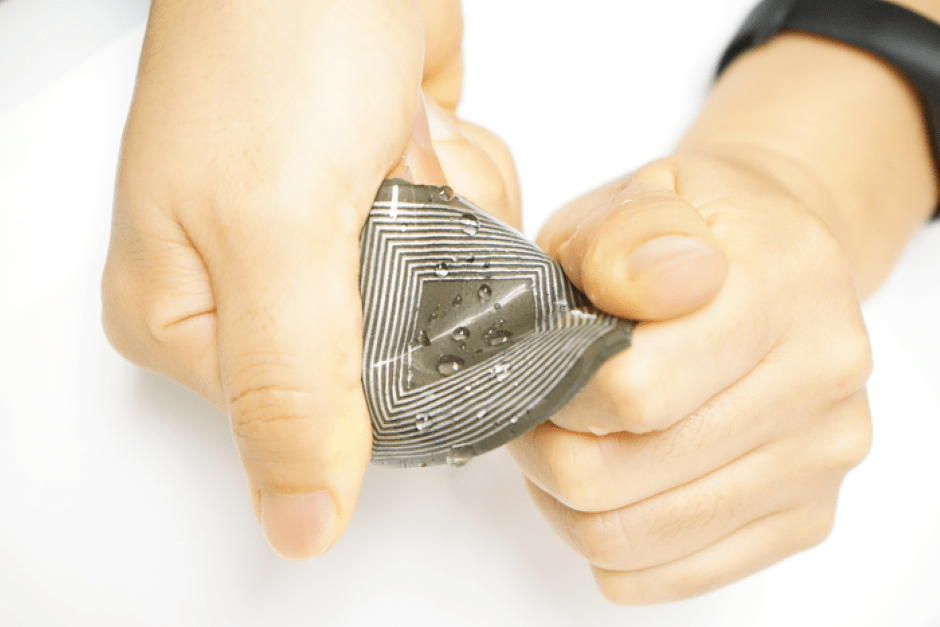
UCLA bioengineers have invented a soft and flexible self-powered bioelectronic device that turns body motions into electricity, leading for wearable and implanted diagnostic sensors in the future.
Chen and his team built a small, flexible magnetoelastic generator made of a platinum-catalysed silicone polymer matrix and neodymium-iron-boron nanomagnets. They attached it to a subject’s elbow with a soft, stretchy silicone band and the observed magnetoelastic effect was four times greater than similarly sized setups with rigid metal alloys. As a result, the device generated electrical currents of 4.27mA/cm2, which the team said is 10,000 times better than the next best comparable technology.
It is further claimed that the flexible magnetoelastic generator’s sensitivity could convert human pulse waves into electrical signals and act as a self-powered, waterproof heart-rate monitor. The electricity generated can also be used to sustainably power other wearable devices, such as a sweat sensor or a thermometer.
There have been ongoing efforts to make wearable generators that harvest energy from human body movements to power sensors and other devices, but the lack of practicality has so far hindered progress.
Rigid metal alloys with magnetoelastic effect do not bend sufficiently to compress against the skin and generate meaningful levels of power for viable applications.
Other devices that rely on static electricity tend not to generate enough energy. Their performance can wane in humid conditions, or when there is sweat on the skin. Some have tried to encapsulate such devices in order to keep water out, but that reduces their effectiveness. The UCLA team’s novel wearable magnetoelastic generators, however, tested well even after being soaked in artificial perspiration for a week.
A patent on the technology has been filed by the UCLA Technology Development Group.
 techtronicz
Leave a comment