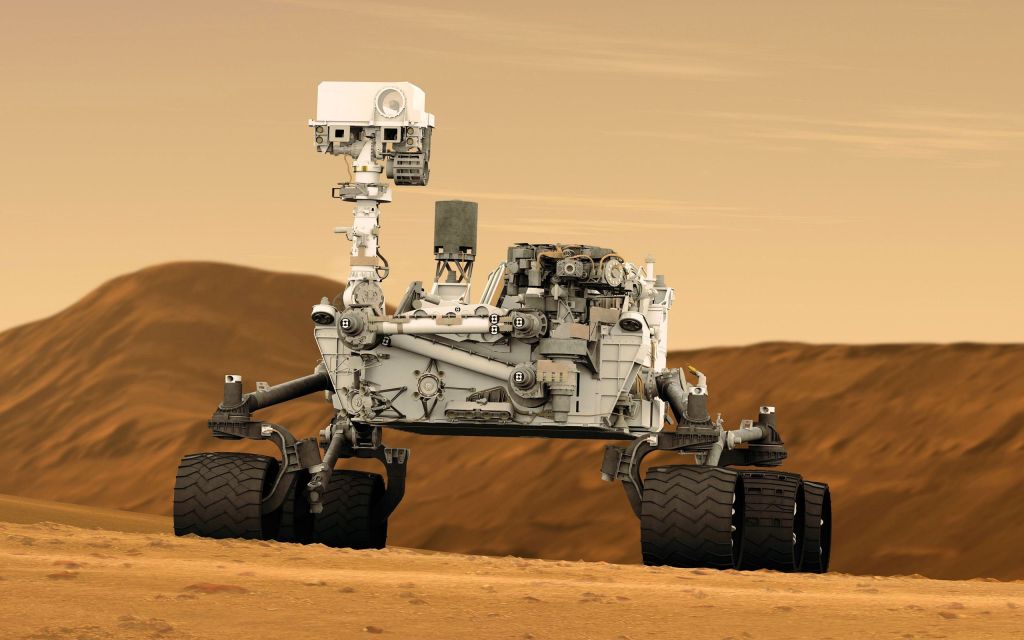
Nasa has confirmed that its Perseverance rover has collected its first sample of Martian rock from the planet’s surface.
The rover dug out a core slightly thicker than a pencil from Mars’ Jezero Crater. The sample is now enclosed in an airtight titanium sample tube, making it available for retrieval in the future.
Perseverance retrieved the core sample from a flat, briefcase-size Mars rock nicknamed ‘Rochette’ using the rotary-percussive drill at the end of its robotic arm.
The arm manoeuvred the corer, bit, and sample tube after completing the coring procedure so that the rover’s camera could scan the contents of the still-unsealed tube and communicate the results back to Earth.
Following confirmation of the cored rock’s presence in the tube, mission controllers sent a command to complete the sample’s processing, after which the container was hermetically sealed.
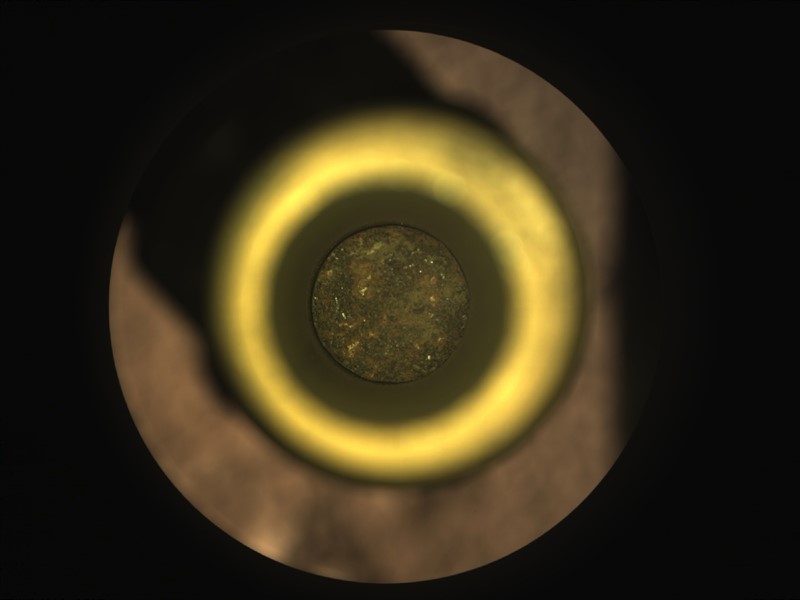
Nasa and the European Space Agency (ESA) are still planning a series of future missions to return the rover’s sample tubes to Earth for closer study, so the sample (pictured above) is unlikely to be returned to Earth for some time.
These samples would be the first time materials from another planet have been scientifically identified and selected and returned to our planet.
Perseverance’s mission includes studying the Jezero region to understand the geology and ancient habitability of the area, as well as developing an understanding of what its climate was like, in addition to identifying and collecting samples of rock and regolith while searching for signs of ancient microscopic life.
This is a truly historic moment for all of Nasa science,” said Thomas Zurbuchen, associate administrator for science at Nasa Headquarters in Washington.
We’ll be doing the same with the samples Perseverance collects as part of our Mars Sample Return programme, just as the Apollo Moon missions established the long-term scientific importance of returning samples from other worlds for study here on Earth.
“We expect jaw-dropping discoveries across a broad range of science topics, including exploration into the question of whether life once existed on Mars, using the most advanced science instruments on Earth.
Perseverance landed on Mars for the first time in February following a seven-month, 293-million-mile trek from Earth.
It will spend the next few years searching for indications of ancient microbial life as part of a mission to send samples back to Earth and pave the way for future human arrivals.
Credits : IET
 techtronicz
Leave a comment